What Regenerative Farming Taught Me About Making Disciples
By Marko Pretorius
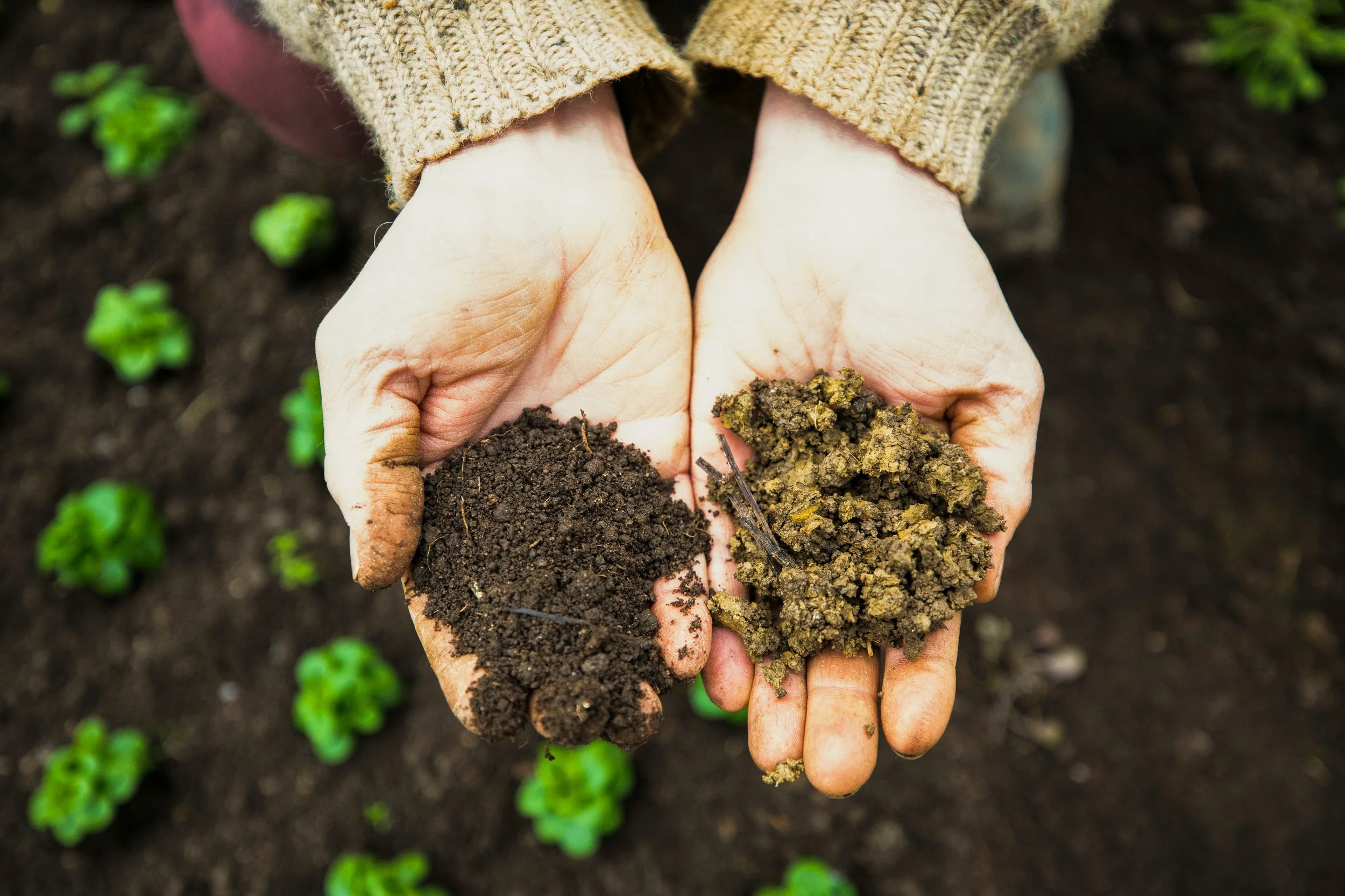
Photo by Markus Spiske on Unsplash
Most of us have been farming our cities the wrong way.
I mean that literally. The model most of us inherited for disciple-making in cities is a monoculture model — take a large piece of territory, clear out whatever was already growing, plant one system, and optimise for efficiency.
Efficient outreach. Efficient follow-up. Efficient discipleship. Maximum yield.
And when it stops working — when the numbers plateau, when good people drift away, when the soil seems dead — the only move available is to push harder. Bigger programs. More training. Hit the same patch of ground with the same hammer, just with more force.
The problem with monoculture farming is fragility.
Strip out the natural ecosystem, plant one crop, and you become entirely dependent on pesticide and artificial fertiliser to keep things alive. The moment the system faces pressure it wasn't designed for, it has no resilience to draw on.
And I would argue that when we apply that same logic to the complex, relational, irreducibly human environment of a city — we end up pushing away the very people who are sincerely searching for Jesus, but can't squeeze themselves into our plans and processes.
There is another way.
The Clump Of Earth That Wouldn't Break
If you haven't watched The Biggest Little Farm, I want to ask you to do that — watch it with your team and have a conversation about what it means for you.
It's a documentary about John and Molly Chester, a couple who dream of buying a monoculture farm and restoring it to something living. What happens over the eight years that follow is one of the most instructive things I've seen about what it actually takes for things to grow.
Their starting point is Molly walking into the field and picking up a clump of earth. She tries to break it between her hands. She can't. She throws it on the ground. It doesn't even shatter — it just lies there, dense and dead.
They bring in a mentor. His first words are not encouraging: this is going to take at least seven years and multiple different strategies. And the first thing they need to do is restore the soil.
So they start.
Cover crops to hold moisture in the ground. Composting. A worm farm to begin rebuilding the biodiversity that monoculture had stripped away. Then chickens, sheep, a vegetable garden, a fruit tree garden.
And as soon as life starts returning to the farm, complexity arrives with it — predators come for the chickens and sheep, ponds are needed to manage water, ducks move onto the ponds, new problems emerge in every direction.
This is the part of the documentary that gets uncomfortable. Because everything John and Molly had signed up for was harder than they expected — and the temptation to default back to what they knew was constant.
Ducks, Coyotes, And Adaptive Thinking
At one point, a snail infestation goes for the fruit trees.
John is out in the orchard picking snails off by hand, dropping them into a bucket — and watching them crawl back out again. Volunteers on the farm are pushing him to just use pesticide.
Get it under control. Go back to the monoculture playbook.
Then coyotes start killing the chickens and sheep. Volunteers leave the farm in protest because John won't shoot them.
Their mentor had warned them this would come. Not the coyotes specifically — but the pressure to reach for a simple solution to a complex problem.
His counsel was this: when you learn to look at the whole ecosystem, you will find that the challenges and the solutions are almost always connected. The question is whether you are willing to hold the tension long enough to see it.
The breakthrough came when John was standing helplessly in the orchard and watched a duck walk past and eat a snail.
The snail problem was solved by something already present in the ecosystem. He opened the gates, the ducks moved in, and the orchard recovered. And in time, the coyotes began doing the same thing with the gophers that had been damaging the fruit trees.
Seven years after Molly couldn't break that clump of earth, she walked back into the same field and pressed her hand into the soil. It was dark and rich and alive. One teaspoon contained nine billion microorganisms.
Imagine that. Nine billion microorganisms in a teaspoon of soil that had once been too hard to break.
What This Means For Our Cities
This is the image that changed how I think about cities.
What if we approached them not as territory to be managed for maximum yield, but as living ecosystems — complex, layered, already containing within them the seeds of what God wants to grow?
Cities are living, moving systems — neighbourhoods, relationships, cultures, histories, broken places, and surprising pockets of life. God is already at work in them. The question is whether we are paying attention to what is already stirring, or whether we are so committed to our own systems that we can't see it.
Regenerative thinking starts with the soil.
It starts with honesty — a willingness to pick up the clump of earth in our context, feel how hard it is, and ask what it will take for things to actually grow here. Not what program has worked somewhere else. What does this soil need?
That question is harder than it sounds. And it is where the real work begins.
If your city is a living ecosystem, complex and layered, already being worked on by a God who moves before you arrive — what is the first thing that needs to change about how you approach it?
Getting practical
As you think about God's vision for your city and/or affinity group:
Molly couldn't break the clump of earth. If you tried to describe the soil of your current context honestly — not how you hope it will be, but how it actually feels right now — what would you say?
John resisted the pressure to reach for pesticide and a rifle. What is the complex challenge in your context that you have been trying to solve with a simpler playbook — and what resources or relationships might already be present in your ecosystem that you haven't yet noticed?
Marko runs with a small group of leaders and teams tackling the complexity of bringing God’s kingdom to urban and peri-urban environments www.twofoureight.org.
© 2026 Marko Pretorius. All rights reserved.
One article a week
For anyone who carries a hunger for the lost and broken in their city.