
How Your City's History Should Shape Your Prayer Strategy (and Your Team!)
By Pyry Winter
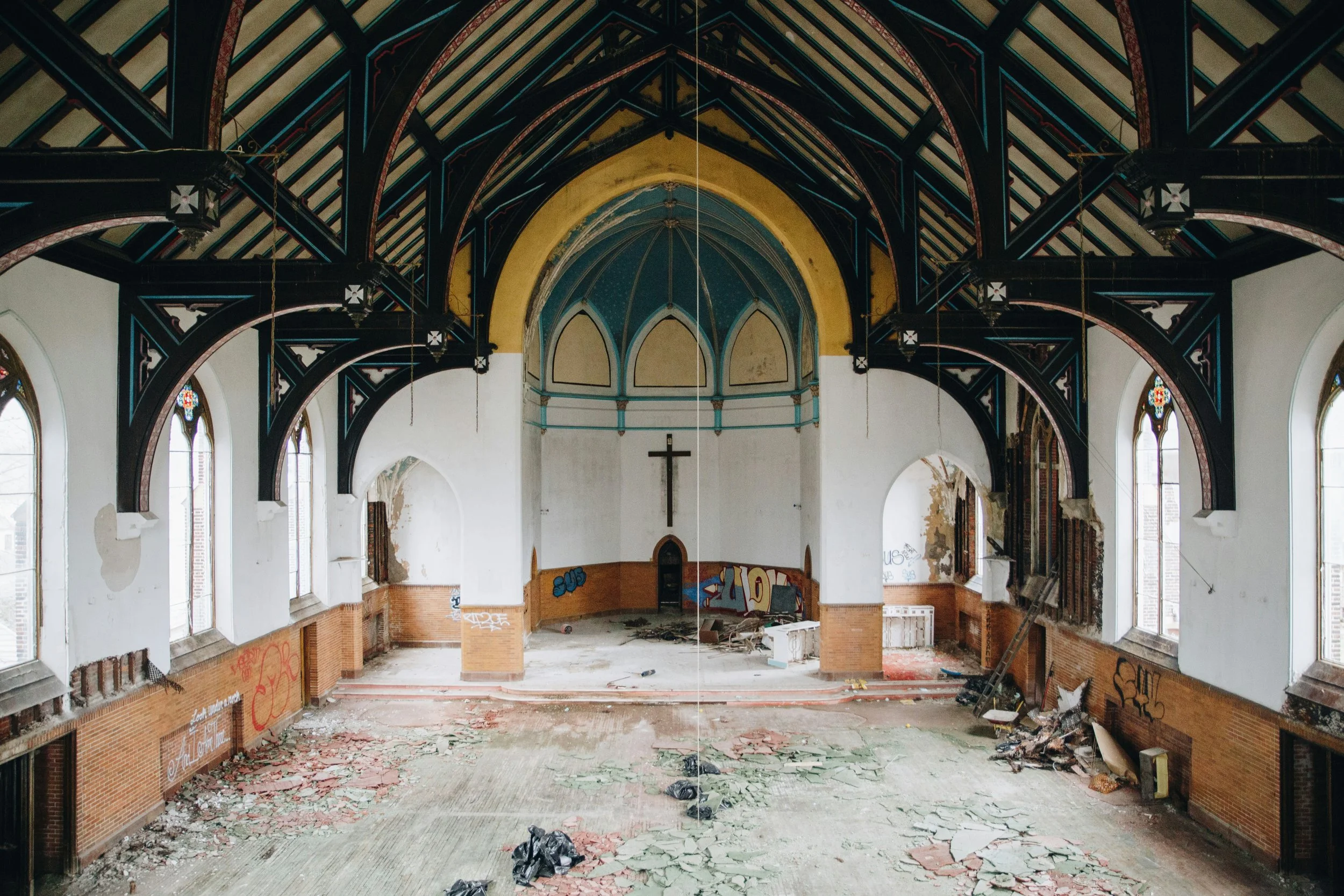
Photo by Christian Garcia on Unsplash
We were on a guided historical tour of Turku, Finland. Our guide was talking about the history of the cathedral.
He was describing how the church had controlled people through fear and shame.
Attendance at mass was not optional — miss it, and you became an outcast. Your social standing, your employment prospects, your place in the community: all of it was tied to your relationship with the religious authorities.
And if you had sinned publicly?
There was the shame stool.
Before the sermon you climbed up, stood before the congregation, and your sin announced. Everyone knew. If things were serious enough, you could be barred from mass for a month — which meant being cut off from the community entirely.
Turku was Finland's religious capital. Home of the main cathedral and the archbishop. The centre of spiritual authority in the nation.
So I asked myself: if these religious authorities were the representatives of God in people's lives, what picture of God were they forming?
A City Shaped By Its Spiritual History
This is at the heart of spiritual mapping — and it starts long before you engage anyone evangelistically.
A people group does not arrive at the present without a past. The spiritual, religious, and cultural forces that have shaped them over generations are still at work. If the gospel has not renewed people's minds, they carry that inheritance.
I hear it in conversations all the time.
People say things like: "I can't come before God before I've cleaned myself up." There is so much shame around sex and the body that it becomes almost impossible to have a healthy, honest conversation about it.
These are not random hang-ups. They are the fruit of a spiritual history — lies about God and about themselves that have been passed down, absorbed without question, and mistaken for truth.
This is not unique to Finland.
Every city, every affinity group, every people has a spiritual history.
And that history has shaped the terrain you are walking into.
What The Enemy's Strategy Reveals
When I look at what happened in Turku, I find it helpful to ask, “From the enemy's point of view, what is the strategy here?”
One of the enemy's primary goals is to get people away from God.
If you can position the face of God as someone who controls through fear, who shames, who excludes, who makes demands — people receive a distorted picture. They carry lies about who God is, and those lies shape everything: whether they approach Him at all, whether they feel worthy, whether they relate to Him through love or through dread.
The lies people carry about God are not random. They are strategic.
What Spiritual Mapping Is
Spiritual mapping is the practice of discerning that terrain.
You go into a people group with a set of questions: What are the lies they believe — about God, about themselves? What is the brokenness? What is the truth they are living in? And what would the gospel actually look like, spoken into that specific history?
It gives you coordinates for your prayer.
When I have mapped the spiritual terrain, I can pray specifically: “Lord, there is a shame-based religious spirit at work here. I pray against that influence, and I ask for freedom for these people to see you as you actually are.”
I know what I am praying against. I know what I am asking God to replace it with. The prayer becomes concrete — and concrete prayer hits something.
My team developed a spiritual mapping tool after years of doing this work — first informally, as we tried to understand the affinities we were engaging, and then more deliberately as we saw what targeted prayer was actually producing. The mapping is not an end in itself. It is intelligence that serves intercession.
The Team Is Changed First
One more thing I have learned: when you begin to spiritually map an affinity group, the prayer does not only affect the people you are praying for.
It starts with you and your team.
We were mapping Finnish men — young men, largely outside the church, with particular patterns of brokenness.
One of the things that surfaced was how Finnish men view women.
As we prayed together, one of the men on our team recognised the same distortion in himself. He had grown up in a family where women were not shown value — not because anyone decided that, just because it was the air he had breathed. He bought flowers for his mother and his sister, told them they were valuable, and offered to serve them.
Something broke open in his family.
That is what spiritual mapping does.
It is a declaration of war — and the first battlefield is often the hearts of
the people doing the praying.
The Question Behind The Question
Before you can pray well for a people, you need to sit with a harder question: “What picture of God are the people in your affinity carrying — and where did that picture come from?”
That question is where the prayer work begins.
Getting practical
As you think about God's vision for your city and/or affinity group:
Read James 3:9–12. The same spring cannot produce both fresh water and salt water — and yet in Turku, Finland's spiritual capital was also the source of its deepest spiritual distortion.
Where in your context do you see a religious heritage producing both life and harm in the same community?
What do the people in your affinity actually believe about who God is — not what they would say if asked, but what their shame, their distance, or their desperate striving suggests they believe?
What do you know about the spiritual history that has shaped them? How do you begin to map that out?
Pyry Winter works with teams in Finland and across Europe, building community among highly individualistic people groups to see disciple-making movements take root. https://mt28.fi/
© 2026 Pyry Winter. All rights reserved..
One article a week
For anyone who carries a hunger for the lost and broken in their city.