
What If You Don't Need to Start Something New?
By K. da Silva
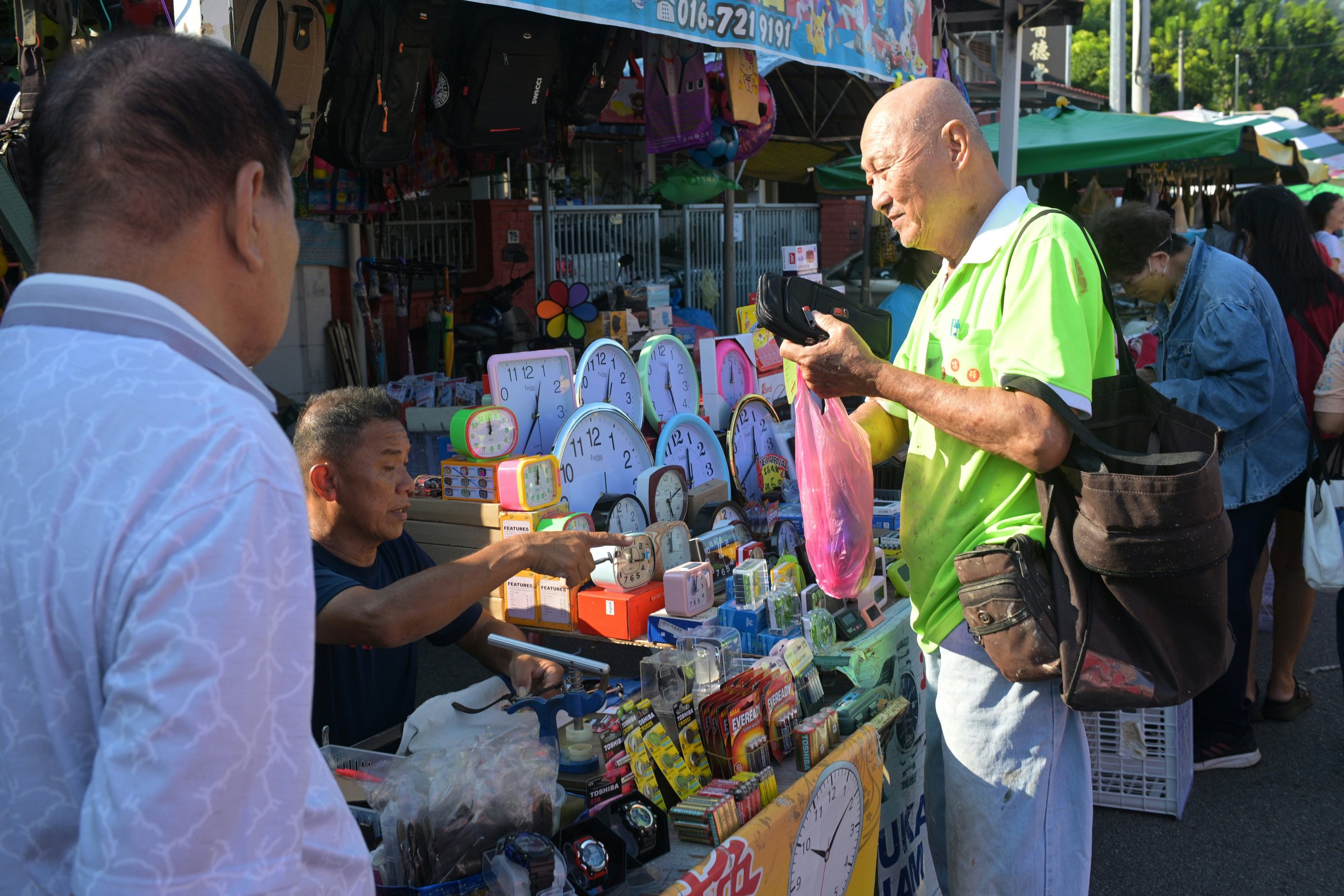
Photo by Kelvin Zyteng on Unsplash
I need to tell you about something that shook me during our last gathering in our city. What shook me was not someone sharing a revolutionary new strategy, but because I finally saw what was already there.
I'd been feeling discouraged, convinced I had no meaningful friendships in my community. No one nearby to share about Jesus with. No bridges into people's lives.
Then a friend asked me a simple question: "Do people smile at you? Do they say good morning?"
Suddenly I remembered — the neighbours who notice when I pass by, the shopkeepers who ask my husband, "Where is madam? Why didn't she come today?" I wasn't invisible at all. The relationships were already there. I just hadn't realised they were the very things I was asking God for.
This is what I want to share with you, because I suspect I'm not alone in this blindness.
What Mapping Revealed
When we started the community mapping exercise, I'll be honest—I'd just heard a brother from Kathmandu share his work, and it sounded so impressive. I was thinking, "We don't have much to put on our map."
But then my husband and I started actually writing down what God is doing through us—the home visits, the children's programs, the relationships we're building, the ways we're responding to brokenness in our community—and I was amazed.
It was so much more than I expected.
The peace that came from this was profound, because it answered a question that had been exhausting me: Do I need to start something new?
I've heard so many visions, so many new ideas for ministry. And for the first time, I understood—
it's not about opening a new ministry or bringing new ideas.
It's about looking for what God is already doing in you, through you, and in your community.
Not what *could* be. Not what *should* be. What actually is.
The Keys We Hold for Each Other
But here's where it got even more beautiful: when we shared our maps with teams from different neighborhoods, we started seeing keys.
One group shared about their home visits, and they mentioned checking blood pressure and sugar levels for parents. We do home visits too, but we'd never thought of basic health checks. It's not expensive—just buy a machine—but think about the message it sends: "We care not just about your kids, but about you as parents, about your whole family."
That's a key this team was holding that can unlock deeper trust in our context, too.
And when we shared about the brokenness we're seeing—girls as young as eleven being married off because families can't sustain them—and how we're thinking about opening a house where girls can live, receive education, and be protected, other workers said, "Why didn't we think of that? That's exactly what we need, too!"
One neighbourhood can hold a key to another neighbourhood.
The problems you've already learned to address might be exactly what I'm just beginning to recognise. But we only discover these keys when we stop working alone and start connecting our maps.
This isn't about networking for practical benefits—it's about asking each other, "What is God showing you that might help us? What are we learning that might serve you?"
From Isolation to Movement
In the past I had heard our leader talking about ten other teams in our city and I used to wonder, "Where are they?"
They were already here—already serving, already present—but we weren't connected. We weren't a community. We were just scattered workers doing our own thing in our own corners.
But the rhythm of gathering twice a year has changed that.
It felt like an avalanche—it started with small waves, but it became something that shook me and taught me new ways to do the things we're already doing.
Not new things. New ways.
The avalanche pulled up some roots I didn't even know I had—assumptions about who leads, who has potential, what counts as real ministry. And God is rebuilding with new patterns.
What made this different from other trainings I've attended?
And honestly, seeing each other after months apart brings such joy. That joy itself is part of what sustains this work.
My Exhortation to You
So here's what I want to say to you, fellow worker, wherever you are: Stop looking for the new thing you need to start, and start looking at what God has already placed in your hands.
Map it. Write it down.
The relationships that already exist.
The relationships that already exist. The small acts of service you're already doing. The people who already know your name and notice when you're not there. These aren't potential ministry—they're the living fabric of relationship through which the kingdom is already growing.
And then—and this is crucial—find another worker and share your maps.
Not to compare or compete, but to exchange keys. What has God shown you that might help them? What are they learning that might unlock something in your context?
I came from a culture where we assume the elders have all the wisdom and all the tools.
But I'm learning that God gives different keys to different workers—young and old, experienced and new, from different neighborhoods and different backgrounds. We need each other's keys.
The map already exists. We just need eyes to see it, and community to help us read it together
For Reflection
1) A Scripture:
"Two are better than one, because they have a good reward for their toil. For if they fall, one will lift up his fellow. But woe to him who is alone when he falls and has not another to lift him up! Again, if two lie together, they keep warm, but how can one keep warm alone? And though a man might prevail against one who is alone, two will withstand him—a threefold cord is not quickly broken." (Ecclesiastes 4:9-12, ESV)
What does this passage tell us about the strength that comes from workers connecting and sharing what God is doing in their different contexts?
2) A thoughtful question :
What relationships and work has God already placed in your hands that you might be overlooking because you're focused on what you think should be happening instead of what actually is?
3) A possible application :
What if you reached out to another worker this week—someone serving in a different neighborhood or context—and asked them to share their community map with you, so you can see what keys you might exchange for each other's work?
K. da Silva is a “Next Gen” harvest worker from South America. With her South Asian husband she is part of a network pursuing a disciple-making movement vision for their South Asian city.
© 2026 K. da Silva. All rights reserved.
One article a week
For anyone who carries a hunger for the lost and broken in their city.