How to See What God Is Doing in Your City
By Marko Pretorius
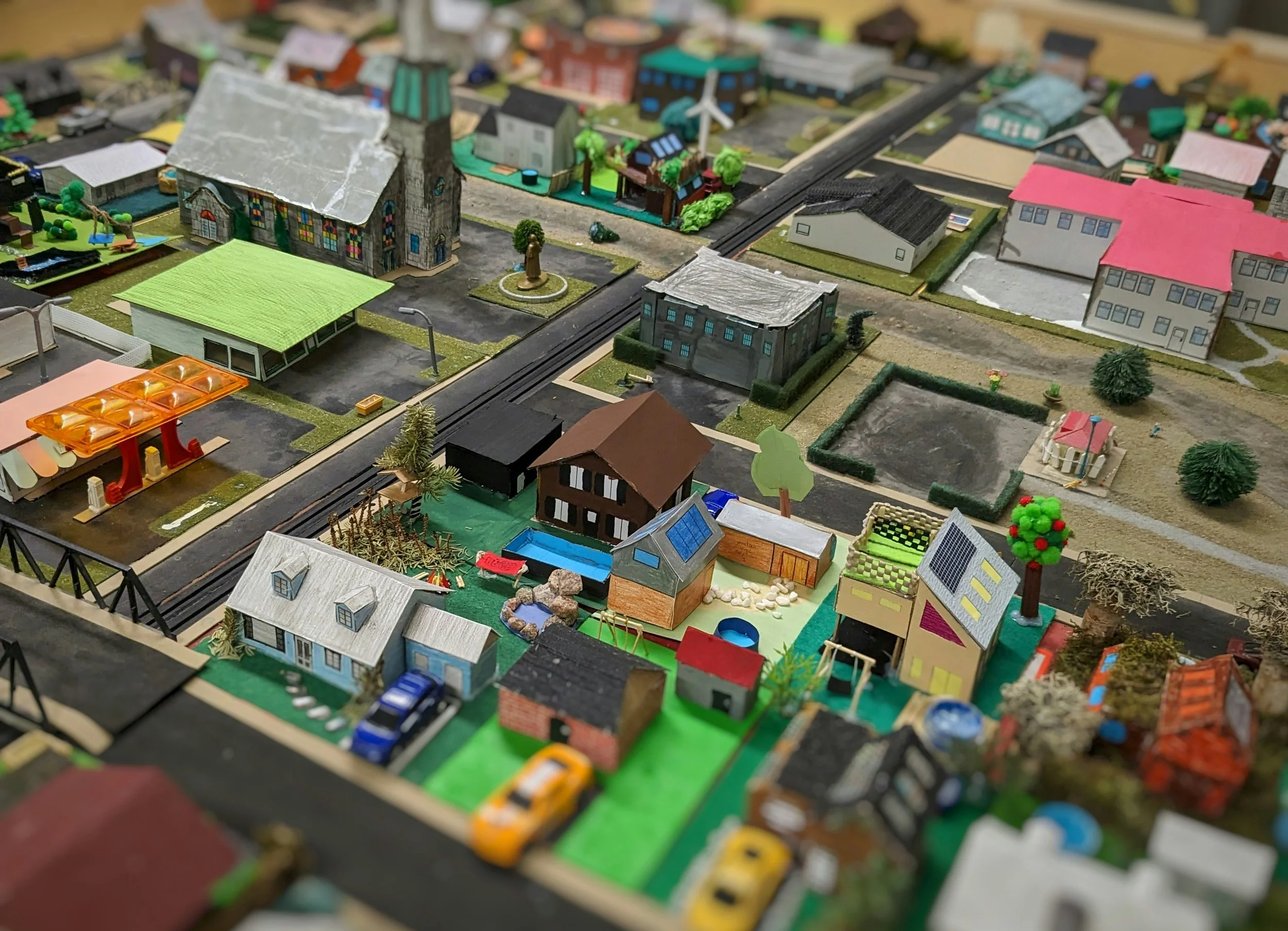
Photo by Compagnons on Unsplash
Early in my ministry I was convinced that what I needed was a better map.
I'm an architect by training, so when we moved into our city I did what made sense to me: I went and printed a large-format map — the kind that covers an entire wall — and I pinned it up and stood back and looked at it. A volunteer stood next to me. We looked at it together for a long moment.
Then I felt it. That wave of overwhelm. Where do we start? Where do we even go?
The instinct was right. The scale was wrong. A map of the whole city is not the same as a map of where God has given you influence. And until you can see the latter clearly, the former just produces anxiety.
Over the past few years our team has been developing a practice we call ecosystem mapping — drawing a circle around the relationships, spaces, and rhythms where God has currently given us influence, and then asking honestly: what is He doing here, and how do we respond?
What It Is — And What It Isn't
An ecosystem map is not a map of your city. It is not a map of all your relationships. It is not a movement map, and it is not a prayer map — although prayer runs through every part of it.
What it is: a truthful picture of the spaces, relationships, and rhythms where you are actively engaging people in the kingdom.
Complex enough to reflect reality. Honest enough to reveal what's actually missing.
The word truthful matters.
I was once in a context in the Middle East where something remarkable was happening — people coming to faith, communities forming, a movement stirring. And when the different missions teams in that city described it, they each claimed it.
But none of them named the Orthodox church that had been the first to respond when refugees crossed the border, or the local families whose relationships and credibility had made the whole thing possible. We were not giving a truthful picture of what God was doing in that city.
The ecosystem map is a tool for honesty. And honesty is where good discernment starts.
Four Ways An Ecosystem Map Helps
1. Recognising that God is already at work
I arrive in a city where God is already moving — and my job is to find where, and join in. The leaders who will be most effective in complex urban environments are those who lead from a non-anxious presence, dependent on the Holy Spirit, genuinely attentive to what Jesus is doing around them.
The map is a tool for that attention.
When I sketch out the relationships and spaces where I have influence, I can step back, pray over it, and ask: “Lord, where are You moving? What are You doing that I haven't noticed yet?”
2. Rhythm and focus
We practice a monthly rhythm of mapping and praying — sketching, stepping back, walking away, returning, and asking: what needs my attention, and what is stealing my focus? The map generates a very specific action list.
Things like: I need to spend time with this leader, there's obvious fruit there. These two people have something in common. Could I bring them together? This person wants to start a business and needs a team around them.
Get it into the calendar!
The map makes the next step visible, and it helps you prune the things that are crowding out what matters.
3. Measuring growth truthfully
We keep a progress tracker alongside our maps. It asks: where are we now, and where do we have faith for in the next year? We track disciples, disciple-making leaders, groups, discovery groups, redemptive initiatives, and strategic partnerships.
Redemptive initiatives are particularly important — these are the places where we are addressing brokenness directly: fitness groups, programmes for children, support for entrepreneurs. They open the city to discipleship in ways that a purely attractional approach cannot.
The tracker keeps us honest about what is actually growing, not just what looks good.
4. Adaptive thinking
The map lets you stand back and ask:
Where are the challenges?
What is eating at the ecosystem?
What is stealing energy and focus that we haven't named yet?
In my experience, two things come up almost everywhere — busyness (leaders are stretched too thin, with no clarity about what their actual role and focus should be for this season), and leaders who have never experienced being discipled themselves and genuinely don't know what they're trying to multiply.
Naming those things is the first step toward finding a creative response — the adaptive equivalent of opening the orchard gate and letting the ducks in (that’s a reference to The Biggest Little Farm. Make sure you watch this with your team - if you haven’t already!).
How Jesus Moved
When I look at how Jesus moved, I see something that looks less like a programme and more like an ecosystem.
He had many disciples around him, and out of that wider group he formed a team of three, a team of twelve. He sent seventy-two out on mission. He stayed in people's homes — houses of peace, places where a family's welcome became a base for the kingdom. He was close to Lazarus and his sisters. There were women who travelled with him and funded the work. There were catalytic public moments (the feeding of the five thousand) alongside long, slow investments in a handful of people.
Multiple things. Multiple scales. Multiple entry points. Nothing wasted.
I'm not trying to decode that or extract a blueprint. But I do think it gives us permission to think in ecosystems — to expect that the kingdom grows through complexity, not in spite of it.
Getting practical
As you think about God's vision for your city and/or affinity group:
Read Luke 10:1–9. Jesus sent the seventy-two out specifically to look for a person of peace — someone whose welcome would open a whole household to the kingdom. Who might be that person in your context right now, and have you been paying close enough attention to notice them?
If you sketched out the relationships and spaces where God has currently given you influence — what would surprise you about what's there? What would surprise you about what's missing?
Where are you currently measuring growth in ways that tell you what you want to hear — and what would an honest picture actually reveal?
What is one challenge in your ecosystem that you have been trying to solve with more effort — and what creative response might already be present in the relationships and resources around you?
Marko runs with a small group of leaders and teams tackling the complexity of bringing God’s kingdom to urban and peri-urban environments www.twofoureight.org.
© 2026 Marko Pretorius. All rights reserved.
One article a week
For anyone who carries a hunger for the lost and broken in their city.