
The Gospel as a Mosaic, Not a Single Message
By J. Pietiläinen
There's one word in Greek that I really love: basileia—kingdom.
I studied it through Luke's gospel and found something fascinating.
In Luke 8, 9, and 10, there's a progression. Luke 8: Jesus tours villages with the twelve and some women. Luke 9: Jesus sends out the twelve without him. Luke 10: Seventy-two people go out.
But look at the message:
Luke 8:1: "Jesus began a tour of the nearby towns and villages preaching and announcing the good news about the kingdom of God."
Luke 9:2: "Then he sent them out to tell everyone about the Kingdom of God."
Luke 10:11: "Know this, the kingdom of God is near."
"The kingdom of God" - that was the message.
Wait, What About the Cross?
Here's what got me: as I'm meeting people, I really want to talk about Jesus dying on the cross. But in these passages Jesus didn't even die on the cross yet. What happened? What did He preach if He didn't preach dying on a cross? I've seen it happen.
The cross is important, but that wasn't Jesus' message when He was here. That wasn't the disciples' message when He sent them out. They were announcing the kingdom of God.
This made me think differently about how I've learned to preach the gospel.
So often when I've learned how to share the gospel, it's been about Jesus dying on the cross. And we begin with this. But I think we should really open this up, and this has really helped me to help other people understand how to have spiritual conversations.
The Mosaic Approach
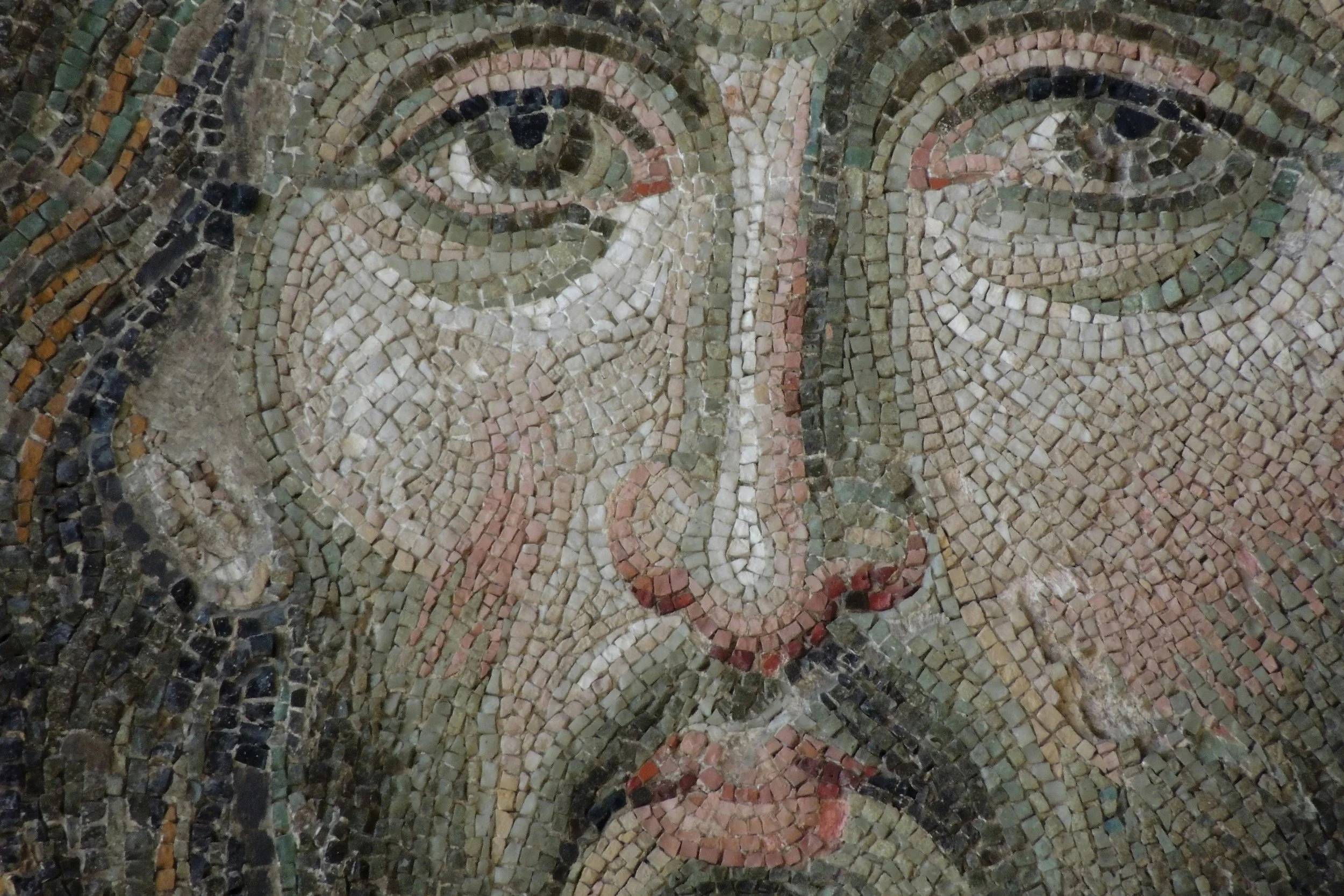
What I think Jesus is showing us is a mosaic approach. You know, a mosaic is like a huge picture that is made up of lots and lots of individual coloured stones or pieces of glass. Each one has its own beauty, but you can only see a picture when you step back and look at all the little pieces together.
For example, who is God? He's peace. When I pray for people and they feel peace, I say, "Did you know God brought you that peace?" That's one mosaic piece.
Another piece: "God is joy."
You have all these aspects of who God is. And yes, in the middle is Jesus on the cross, making our connection with God possible.
But we can have this slimy feeling trying to explain the cross and resurrection in a single conversation. Often it's abrupt and it doesn't fit the conversation or the questions the person is asking. To them, it's the wrong piece of the mosaic - it's not a beautiful picture, it's just a piece of coloured glass.
Particularly in urban contexts, I think we need to understand: we're building the mosaic piece by piece. Maybe over six months, maybe five years, maybe two weeks.
And the picture we're building isn't focussed on the cross - it's about helping them get a clearer picture of who God is and what 'the kingdom' means.
Jesus Is Lord, Not Just Information
What is the kingdom of God? It's about Jesus being Lord. Jesus being Lord of all.
He's not just information that you believe about: "Hey okay, Jesus died on the cross. I'm saved." He's actually Lord.
What does it mean in my life that Jesus is Lord of my money? Lord of my relationships? Lord of everything?
So we can start with the cross. We can end with the cross. It can be in the middle. It can be all of that. But it doesn't have to be started from that.
How This Actually Works
I have a friend, Veli, I met through the homework club we started at university.
At the homework club we do study sprints together using pomodoro - 25 minutes of study, then breaks where people connect but he's been learning and imitating what he sees.
After a month away, he called to tell me he'd done something "weird." Someone in his course shared a relationship struggle, and Veli asked, "Can I pray for you?"
Now, Veli's shy, not outgoing. I've never told him to do pray for people, never trained him. He's just seen me and others at homework club do it, and experienced something he felt was good. And when his friend shared their struggle, he prayed for them.
Then in our DBS, he told me about visiting France with his father. He was reading the Bible and he shared with his dad about Noah and the flood. His very private Finnish father looked confused and said, "Isn't faith a private thing?"
Veli - who is early in his journey to know Jesus - replied: "Dad, did you know we are doing this together like Jesus did and we follow Jesus’ footsteps by making disciples.”
He's building the mosaic. Piece by piece. Learning what it means that Jesus is Lord through seeing it in community, experiencing it and living it.
Building in Your Context
What I've seen is that people are curious about you and your journey with Jesus, even before they're curious about the Bible or God.
I share Bible stories that affected my life. We read together. I ask them, "What do you hear?" Then I share why it matters to me—connecting Scripture to my journey.
When they ask questions, I don't give answers; I share more verses. "Jesus said this about money. What do you think?"
Step by step, building the mosaic.
This approach gives us freedom. We don't have to pack everything into one conversation or feel like failures when someone doesn't immediately understand. We're just building, trusting the Holy Spirit is working.
We show them who God is through peace, joy, healing, community, justice, love—and yes, through the cross and resurrection at the center. But we can be patient, announcing the kingdom and letting people discover it piece by piece.
The kingdom isn't just information. It's Jesus being Lord of everything. And people need to see what that looks like before they can understand what it means.
Go build some mosaics. One conversation, one prayer, one shared meal at a time.
PS Shoutout to this podcast which gave me the idea of the mosaic approach - it has shaped my thinking about spiritual conversations in helpful ways.
For Reflection
1) A Scripture :Luke 9:1-2, 6
"One day Jesus called together his twelve disciples and gave them power and authority to cast out all demons and to heal all diseases. Then he sent them out to tell everyone about the Kingdom of God and to heal the sick... So they began their circuit of the villages, preaching the Good News and healing people everywhere."
What does this passage tell us about the message of the Kingdom? What does it tell about about the living out of the kingdom?
2)A thoughtful question :
How would your approach evangelism change if you thought of yourself as building a mosaic over time rather than delivering a complete message in each conversation?
3)A possible application :
What is one specific aspect of God's character or the kingdom (peace, joy, healing, community, justice) that you could help someone experience this week, without necessarily explaining the whole gospel?
J. Pietiläinen and his wife are “Next Gen” harvest workers in Finland, part of national and local teams pursuing a disciple-making movement vision in their city and nation. This is the second article in a series. If you enjoyed this, you can access the first article here.
© 2026 J. Pietiläinen. All rights reserved.
One article a week
For anyone who carries a hunger for the lost and broken in their city.