
When "Where Do You Go to Church?" Gets Complicated
By Josh Davis
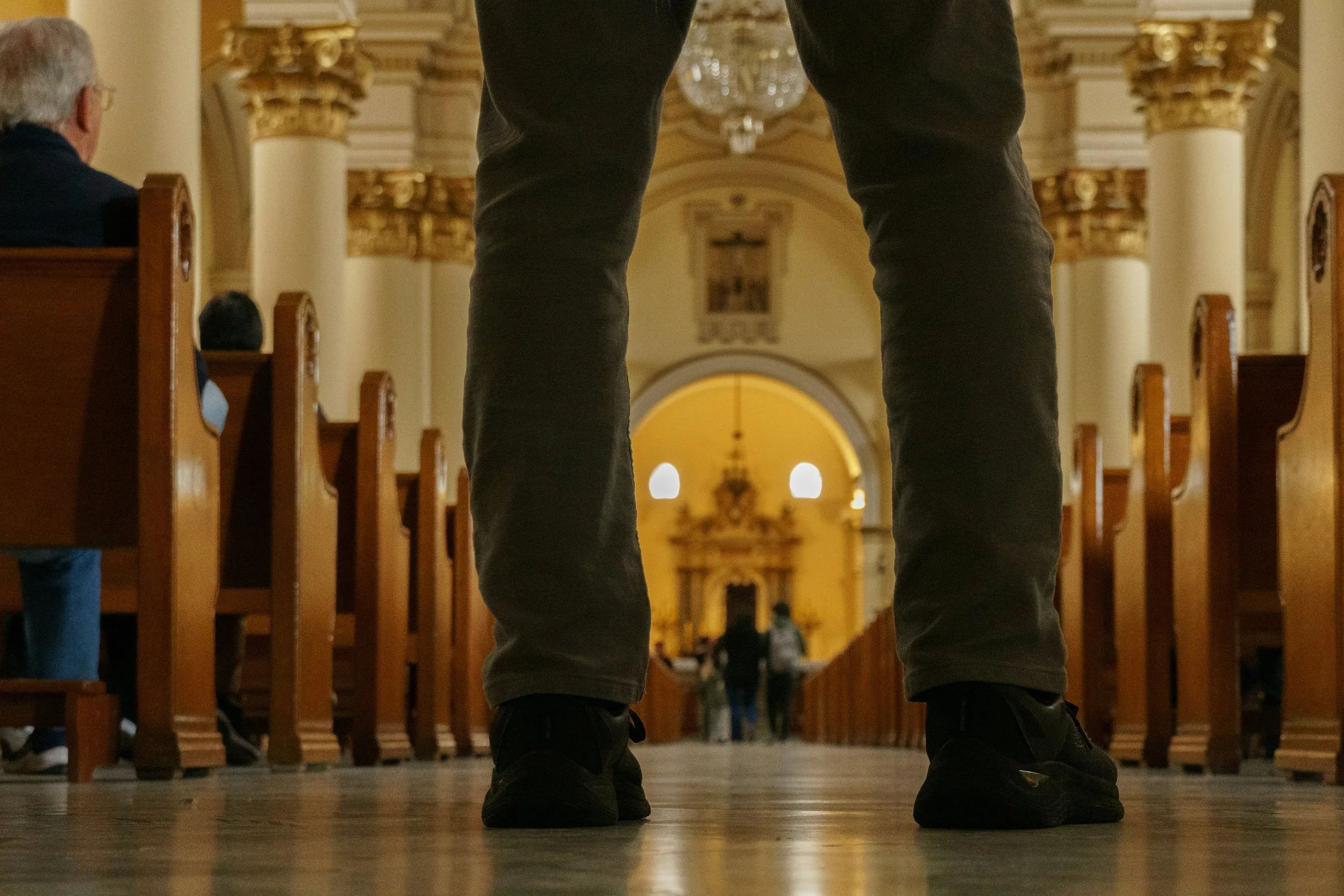
Photo by Reza Madani on Unsplash
There's a question I've been asked dozens of times that I still haven't learned to answer well.
"Where do you go to church?"
It sounds simple, but every time someone asks, I feel a familiar tightness. I have too many things to say about church, discipleship and the Kingdom of God and none of them fit the shape of that question.
So I hedge. I qualify. I say something technically true that captures almost nothing. I walk away feeling like I've missed something real.
The honest version: I've been defining myself by what I'm not.
When The Simple Question Isn't Simple
Part of the problem is what the question carries.
"Where do you go to church?" comes loaded with an implied checklist: what's the brand, what day, how many people, is there a pastor and a sermon and organised music? Answering on those terms feels like accepting a frame that misses what church is actually for.
But push back on the frame - ask "what do you mean by worship?" or "why does the day matter?" - and you've turned a friendly hello into a theology seminar nobody signed up for.
I recently ran into someone I hadn't seen for years and he asked where I worshipped. I stumbled into a vague answer about a house church with some friends, then he asked if we met on Sundays and I remember thinking: why does that matter? I answered anyway.
By the end of the exchange I'd communicated almost nothing I actually believed.
When It Opened Up
Two conversations changed how I see this.
The first started the same way - someone asking logistical questions about how we met, how many of us there were. I pushed back: I said I didn't really care about those details, they missed the heart of what community is supposed to be about. He didn't fold.
He reframed: these details matter to me, he said, because I'm trying to figure out how to make disciples who make disciples, and hearing how other people do it practically is part of that. If you don't want to talk about it, that's fine - but this is just me trying to understand how it works.
That changed everything.
He was speaking from the heart. He had a purpose he was working toward, and he wanted to know mine. So I told him. We spent the next hour as practitioners comparing notes - what we were doing well, what we wanted to do better, what we hadn't figured out yet.
The most useful conversation I'd had about any of it started with him refusing to accept my deflection.
The second was a different kind of lesson.
We were out one evening when a young guy approached our group to evangelise us - zealous, intense, trying to share the Gospel and asking whether we were serious about our faith. I could feel something competitive rising in me. Something that wanted to establish that I knew what I was doing.
Instead, I said: "I really respect your zeal. I want to be more like that. Can you pray for us?"
Something shifted.
His energy changed. He prayed for us, then started talking about what was going on in his own life. He asked if we could pray for him too. It was unexpectedly tender - and it only happened because I put the ego down and just honoured the person in front of me.
What Was Actually Underneath
A question I was asked around that time helped me see what had been driving the stiffness all along.
Is there something unresolved in your heart that is being surfaced in those conversations?
I sat with it. The word that surfaced was: validation.
The person who'd asked me that first awkward question was involved in a large, visible church with a platform, audience, and all the recognition that comes with institutional belonging.
I had none of that.
Beneath my theological convictions and desire to see His Kingdom impact the lives of those outside ‘the four walls’, I'd been carrying something else: a quiet resentment that what I was doing was not being noticed.
That's a long way from the reasons I tell myself I care about the kingdom. The ego had been running under the surface the whole time.
The encounter with the passionate young guy showed me what that actually looks like - when the ego is genuinely out of the way. When I extended genuine honour to the person in front of me, something opened. If I can get my own ego out of the way, that's actually the best thing for the stated purpose I say I care about.
That's the thing worth sitting with.
Taking The Conversation Somewhere
Here's where I’m landing.
When someone asks "where do you go to church?" they are opening a conversation. They're saying: ‘this is something I care about, and I am reaching toward you relationally’.
I get to decide what happens next.
The answer I'm working toward sounds something like this:
We go to church meetings, but we spend more time asking what it means to be a disciple and to make disciples. Even more fundamentally, we're often asking what it means to love God and love our neighbour. We try to do that straight from the holy book. We believe the Holy Spirit is here with us, and if we learn to listen and respond to him, church can happen at McDonald's, on a Zoom call, wherever we are. What about you - what things are most important to you?
The theological grounding matters here. Making disciples is the Great Commission - not the Greatest Commandment. The greatest command is to love God with everything you have, and to love others. Discipleship is the natural outworking of those two.
We can build rules and structures around the Commission and miss what God is actually inviting us into. We're not called to fit the rule or fit the system - we're called to listen and respond to His Spirit. In our community, people bring different gifts, different jobs, different personalities - and together, in Jesus' name, we try to listen and respond and build each other up with what we carry.
I tend not to live my life constrained by how other people frame things. I'm not sure why I kept doing it in these conversations.
I don't think I will anymore.
Getting Practical
As you think about God's vision for your city and/or affinity group:
1) Read Matthew 22:34–40. Jesus names the two commands that everything else hangs on - love God with everything you have, love your neighbour as yourself.
2) Think of the last time someone asked you about your faith or your community. Did your answer come from these two commands - or from something else? What would it sound like if it did?
3) When someone opens a spiritual conversation with you, what's the internal shift that needs to happen for you to take it somewhere meaningful rather than answer on their terms?
Josh Davis is a Melbourne-based entrepreneur who seeks to integrate Kingdom ecosystems in the marketplace that add value to colleagues and clients alike, and support the discipleship journeys of both.
© 2026 Josh Davis. All rights reserved.
One article a week
For anyone who carries a hunger for the lost and broken in their city.