
Where Multiplying Disciple-Making Actually Begins
By Michael Sherwin
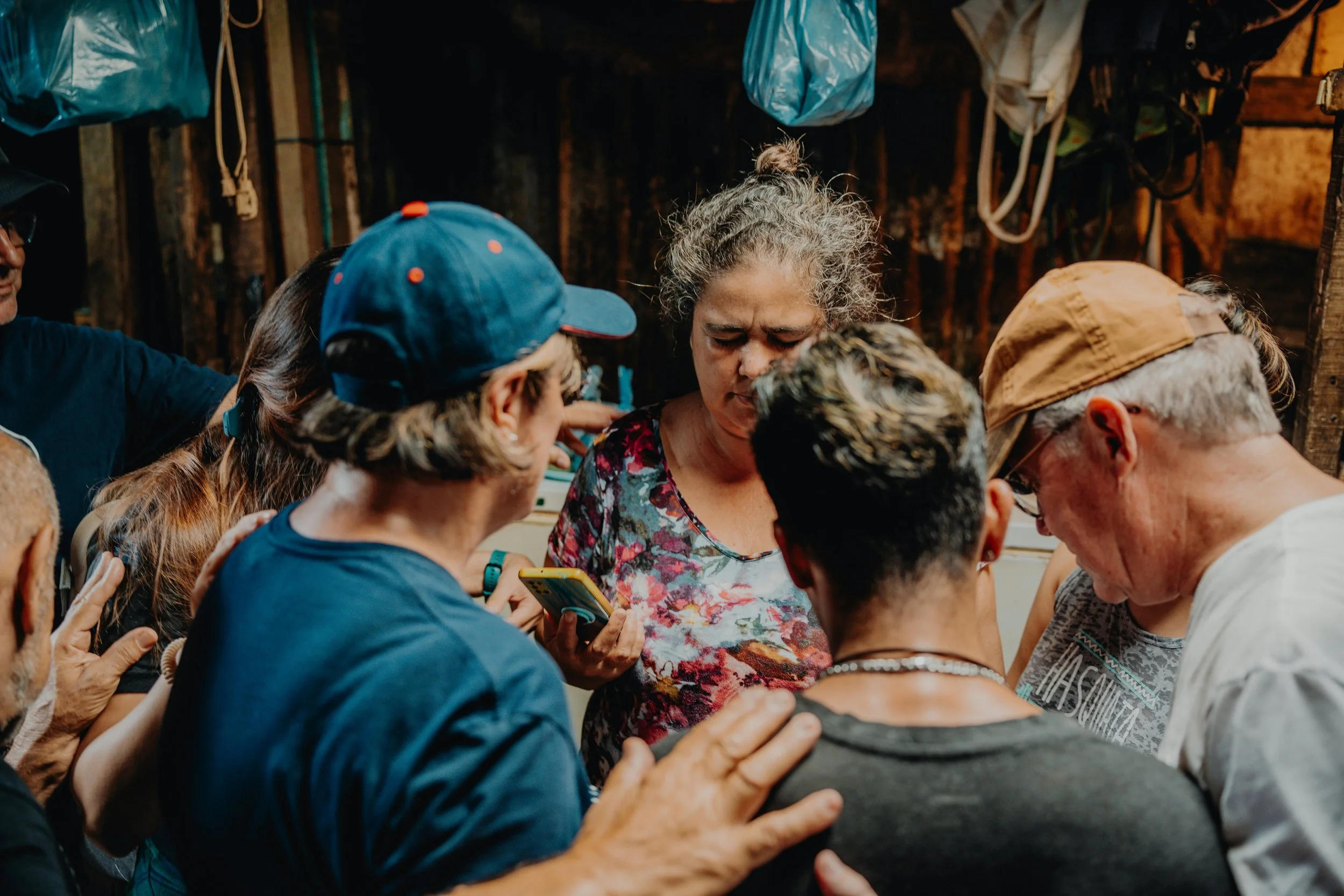
Photo by Elianna Gill on Unsplash
The People Nobody Wanted
*Klein spent years serving in a remote, rural community far from any city.
He and his wife gave themselves to one place and one people over a long stretch of time. They learned the language, walked with families through hardship, and watched an entire community come to Jesus. It was slow and costly work, but over time it bore lasting, abundant fruit. Local leaders emerged, and churches multiplied on their own. In a very real sense, the work Klein had come to do was finished.
So they began praying about what might come next. He assumed God would send them somewhere familiar, another rural community, more of what they already knew.
Instead, God said something that surprised him: “Go to the city. You are losing a whole tribe of young people.”
Klein had already seen it happening.
Young people were leaving their villages and flooding into the growing coastal cities, looking for school and work. Many found neither. They ended up on the side of the road, far from home, with nowhere to belong, in cities carrying some of the heaviest social burdens you can imagine. Whole communities of young people were visible, hurting, and largely ignored.
So Klein went, and when he arrived, he did what he had learned to do in the rural work. He looked for the people nobody else wanted to work with.
His first church in the city was made up of twelve boys off the street. Not promising young leaders or people with obvious potential, but young men with hard histories and bad reputations. He brought them in, lived with them, and began walking through Scripture together. That small group became the seed of what has since grown into thousands of multiplying groups across the region.
Klein put it simply: “God told us: do what others cannot do or will not do. If somebody else can do it, let them do it.”
That posture, moving toward the people and places others had passed over, turned out to be exactly where multiplying disciple-making took root.
The Real Problem
Klein’s story is not mainly about the church’s absence.
It would be easy to hear it and conclude that the church simply needs to show up in places it has been ignoring. Sometimes that is true. But in most cities around the world, Christian organisations are already present at the margins. There are feeding programs, trauma care, anti-trafficking work, job training, and refugee support. The margins are not untouched.
The deeper issue is posture.
A lot of what happens in those spaces is shaped by a graduation mindset. Serve people until they are stable. Help them get back on their feet, then invite them into existing church structures where they can grow. The goal, even when nobody says it directly, is to bring people up and in.
What Klein discovered, and what other practitioners across dozens of cities are observing is that the margins are often where multiplying disciple-making begins and spreads. God wants to trust the broken and overlooked with His mission, and we cannot keep treating them merely as projects waiting to be fixed.
One practitioner in East Africa put it plainly: “When we started to roll this (disciple-making) out in some of these communities that had been no-go areas, we began to see the most unlikely people get saved.”
Most of us are already there.
The harder question is whether we see the people we are serving as recipients or as the very ones God wants to send.
What Jesus Kept Doing
This pattern was clear in the life and ministry of Jesus.
From the beginning, Jesus kept moving toward the people others had written off. In Luke 4, standing in the synagogue in Nazareth, he announced what his mission would look like: good news for the poor, freedom for the captive, sight for the blind, release for the oppressed. The marginalized were right at the centre of what he had come to do.
Then in Luke 14, Jesus tells a story about a great banquet. When the expected guests do not come, the host sends his servants out with a new instruction: go into the streets and alleys of the city and bring in the poor, the crippled, the blind, and the lame.
The table fills from the margins. The movement in the parable is inward, and that image has sometimes been used to justify a graduation mindset: gather the broken, stabilize them, bring them into our structures. Jesus is saying something more revolutionary:
these people belong at the table, and in the kingdom of God, the table must not merely be a place of welcome. It is where sending begins.
Why It Works
There are real reasons why multiplying disciple-making so often takes root among the broken and overlooked.
One is spiritual hunger.
Crisis strips away self-sufficiency, and self-sufficiency is one of the strongest barriers to the gospel in cities. People who feel they are managing fine rarely feel their need very deeply. Those who have known displacement, loss, addiction, or injustice often carry a hunger that is immediate and hard to ignore. They are not far from the kingdom. In many cases they are closer to it than those of us with more to protect.
Another is networks.
Overlooked communities sometimes have something that wealthier, more mobile populations do not: strong relational bonds. Shared housing, mutual dependence, and common need often tie people together in ways that are easy to miss from the outside. When the gospel takes root in those networks, it keeps moving. It travels through relationships that already exist and already hold people together, and what looks fragile from the outside can turn out to be surprisingly resilient.
One practitioner I interviewed in the United States said that when his team first got serious about ministry among the poor, it was like “taking the red pill” (a reference to The Matrix movie). Suddenly he could not stop seeing how much of Scripture is taken up with God’s heart for the vulnerable: the prophets, the life of Jesus, the early church, even Paul’s charge in Galatians 2 to never forget the poor. He said, “The poor are not even just a calling for a few people. It is sort of a kingdom formational mandate for all people. There are particular kingdom treasures that impoverished communities hold that are a gift to the middle class and to the rich.”
God is inviting the marginalized into the same commission he gave his first disciples. They are not waiting to be graduated into significance. They already carry something the rest of us need. Their faith, resilience, and raw dependence on God expose and reshape the assumptions of those of us who have more resources and less obvious need.
What We Have Settled For
Many of us have grown up in ministry cultures that treat the margins as a place to do good rather than a place to begin. We build around people with capacity. We choose places that are accessible. We plan for people who can show up consistently and take on responsibility quickly.
Over time, that creates a ministry gravity that pulls us toward the comfortable and the connected. We start to assume that the most strategic places to invest are also the most stable, visible, and manageable, and in doing so we miss the places where God is already opening hearts and raising leaders.
That drift needs to be named. It shapes who we invest in, where we build, whose leadership we trust, and what we think multiplying disciple-making is supposed to look like.
The same practitioner told me about a moment that changed the direction of his community. Before they launched anything in their city, a core group of leaders made a decision that surprised a lot of people. They realised their vision had become too tangled up with their own cultural assumptions. They could not see clearly anymore. So before they planted a single church, they left their country and spent months living in an urban slum on the other side of the world, sitting under indigenous leaders who had worked among the poor for thirty years.
They did not go to teach or minister. They went to be emptied.
And they came back changed. The community they eventually built was shaped by what they had received in that place, from those people, at the margins. What looked like a detour turned out to be the foundation.
Klein’s story points in the same direction. He did not run a program for those twelve boys. He lived with them. He trusted them with Scripture. He watched them become leaders of something he could not have planned or produced. What looked like the least strategic starting point turned out to be the most fruitful.
A Different Starting Question
Most of us begin with this question: who in my city is ready to become a disciple-maker? Klein began with a different one:
who are the people that no one else is willing to go to?
Those two questions take us in very different directions.
The research behind this article comes from conversations with practitioners in more than thirty countries, working in cities as different as you can imagine. What keeps surfacing across that variety is this: multiplying disciple-making often begins among people the church has overlooked, underestimated, or simply passed by. Not always, but often enough to make us stop and pay attention.
Many of us need to examine our instincts. We need to ask where we are building, why we are building there, and whether our sense of what is strategic has been shaped more by comfort and manageability than by the pattern of Jesus.
In John 20, Jesus says to his followers: “As the Father has sent me, so I am sending you.” That sending was not reserved for the educated, the stable, or the well-connected. It was given to ordinary people who had been with Jesus, and that is still who he often starts with.
*names and locations changed
Getting practical
As you think about your city and the communities you are serving:
Where are you already present among hurting or overlooked communities, and what is the posture of that presence? Are the people you serve being invited into multiplying disciple-making, or into programs that gradually move them somewhere else?
Who in your city might God be positioning as a disciple-maker that you have not yet seen that way?
What barriers, practical, cultural, or internal, are keeping you or your team from starting among the unlikely?
Learn More
This article draws from a larger research project exploring patterns emerging in urban disciple-making efforts around the world. The full report includes insights from practitioners representing city disciple-making across more than thirty countries.
You can explore the full research here: https://twofoureight.org/research/
© 2026 Michael Sherwin. All rights reserved.
One article a week
For anyone who carries a hunger for the lost and broken in their city.